Refinance 5.6% 30-Year Mortgage: 18-Month Break-Even Point
Advertisements
Locking in home equity savings requires carefully measuring upfront closing costs against long-term interest reduction. Choosing to Refinance Mortgage terms to a 5.6% 30-year fixed rate allows homeowners to lower monthly housing payments while optimizing their long-term balance sheet.
Determining the exact 18-month payback horizon ensures your monthly rate reduction rapidly absorbs loan origination and closing fees. Lowering your interest burden accelerates equity accumulation, creating immediate cash-flow relief without compromising overall financial stability.
Evaluating home loan restructuring metrics empowers borrowers to navigate current interest rate environments with confidence. Here is how to calculate your net savings, evaluate lender fees, and pinpoint your exact break-even point.
Understanding the Break-Even Point in Mortgage Refinancing
The break-even point in mortgage refinancing is a crucial metric, indicating when the savings from a new, lower interest rate mortgage offset the upfront costs incurred during the refinancing process. This calculation is fundamental for homeowners to determine if refinancing is a financially sound decision for their specific situation.
For those considering a 5.6% 30-year fixed mortgage, understanding this point means evaluating all expenses against the monthly payment reduction. It’s not just about the lower rate but about how quickly that lower rate translates into net financial gain after accounting for closing costs and other fees.
The current market conditions, including prevailing interest rates and economic forecasts, play a significant role in making this assessment. A thorough analysis ensures that the perceived benefits outweigh the immediate financial outlay, particularly when focusing on Refinance Mortgage.
Defining Refinancing Costs for Accuracy
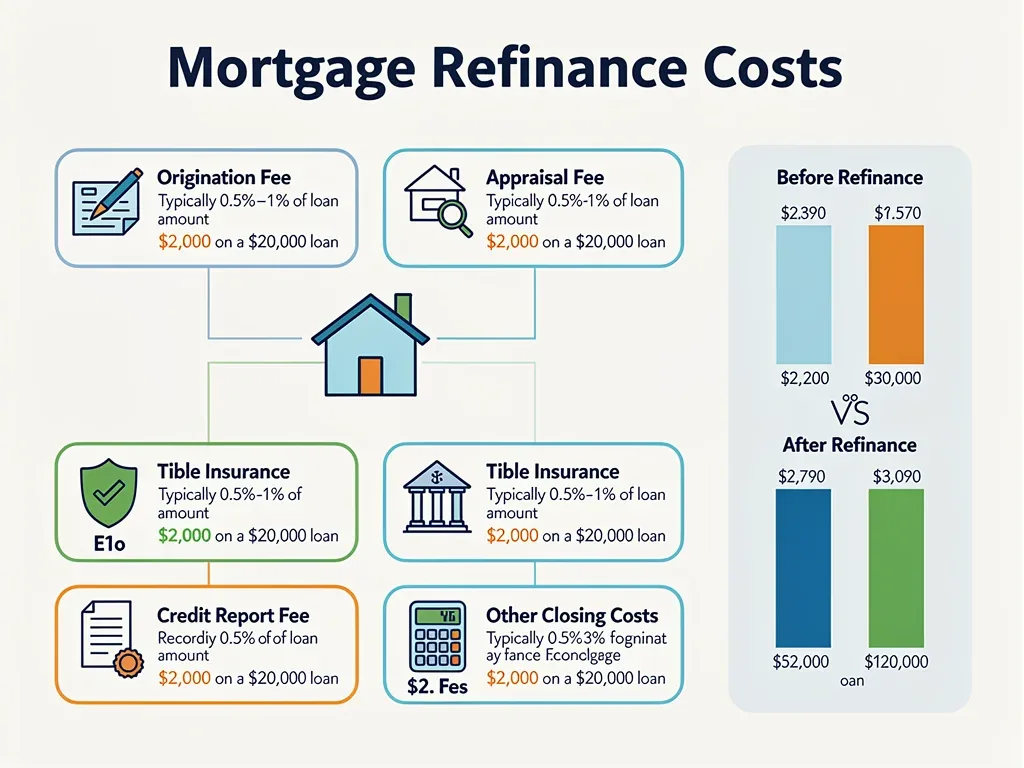
Refinancing a mortgage involves several upfront costs that must be factored into the break-even calculation. These can include origination fees, appraisal fees, title insurance, attorney fees, and recording fees, among others.
Each of these costs contributes to the total expense of refinancing, directly impacting how long it will take to recoup the investment. Homeowners must obtain a detailed breakdown of these fees from their lender to ensure accurate projections and avoid any hidden surprises.
The cumulative sum of these closing costs is the primary figure against which monthly savings are measured when Refinance Mortgage. Transparency and diligence in gathering this information are paramount for a precise analysis.
Origination fees: Charges by the lender for processing the new loan.
Appraisal fees: Cost for a professional property valuation.
Title insurance: Protects both lender and homeowner from title disputes.
Recording fees: Paid to local government to record the new mortgage.
Calculating the Monthly Savings with a 5.6% Rate
Once the total refinancing costs are identified, the next step in Refinance Mortgage is to determine the monthly savings. This involves comparing the new monthly payment at 5.6% with the existing mortgage payment.
The difference between these two figures represents the direct financial benefit received each month from the refinance. This monthly saving is the engine that drives the recoupment of the upfront costs, making it a critical component of the break-even analysis.
It is essential to use precise figures for both the old and new mortgage payments, considering only the principal and interest portions for a direct comparison. Any escrow adjustments for taxes or insurance should be treated separately, as they are not directly impacted by the interest rate change itself.
Factors Influencing Monthly Payment Reduction
Several factors beyond the interest rate itself can influence the exact monthly payment reduction. These include the remaining principal balance on the original mortgage, the new loan term, and any changes to the loan amount.
For a 30-year fixed mortgage at 5.6%, the new payment will be calculated based on the refinanced principal over 360 months. A larger principal balance or a shorter term would naturally result in higher payments, even at a lower rate, so these details are crucial.
Careful consideration of these variables ensures that the projected monthly savings are realistic and accurately reflect the financial advantage of refinancing. This precision is vital for correctly Refinance Mortgage.
The 18-Month Break-Even Formula in Detail
With both the total refinancing costs and the monthly savings established, the formula for Refinance Mortgage becomes straightforward. The break-even point is simply the total refinancing costs divided by the monthly savings.
For instance, if total costs are $5,000 and monthly savings are $250, the break-even point would be 20 months. The goal is to determine if this calculated break-even period is 18 months or less, making the refinance strategically advantageous for that specific timeframe.
If the calculated break-even period exceeds 18 months, the refinance would not yield a positive return within the desired timeframe. This direct comparison provides clear guidance on the financial viability of the refinancing decision.
Illustrative Example: Applying the Formula
Let's consider a practical scenario to illustrate the break-even calculation. Suppose a homeowner has an existing mortgage payment of $1,800 and refinances to a 5.6% 30-year fixed mortgage, resulting in a new payment of $1,550.
The monthly savings would be $1,800 - $1,550 = $250. If the total refinancing costs amount to $4,500, then the break-even point is $4,500 / $250 = 18 months.
In this example, the homeowner would break even precisely at the 18-month mark. This demonstrates how crucial accurate figures are when Refinance Mortgage to make an informed decision.
Beyond the Numbers: Strategic Considerations
While the numerical calculation of the break-even point is paramount, strategic considerations also play a vital role in the decision to refinance. Homeowners must assess their future plans, including how long they intend to stay in their home, as this directly impacts the relevance of the break-even period.
If a homeowner plans to move within the 18-month window, even a favorable break-even point might not yield significant net savings. Conversely, a longer tenure in the home amplifies the long-term benefits of a lower interest rate, making the initial costs more justifiable.
Market trends and personal financial stability are also key factors. A stable job and a healthy emergency fund provide a stronger foundation for taking on new mortgage terms, particularly when Refinance Mortgage.
Market Volatility and Interest Rate Forecasts
The current economic environment and future interest rate forecasts should heavily influence refinancing decisions. While a 5.6% 30-year fixed rate might be attractive now, understanding potential future rate movements can provide additional context.
Economists and financial analysts regularly provide projections on interest rate trends, which can help homeowners anticipate whether current rates are likely to hold or change. This forward-looking perspective adds another layer of sophistication to the decision-making process.
Staying informed about these forecasts can help validate the timing of a refinance and ensure that the 18-month break-even target remains relevant. This holistic approach is essential when Refinance Mortgage.
Future housing plans: How long will you reside in the home?
Personal financial stability: Job security and emergency savings.
Market outlook: Economic forecasts and interest rate predictions.
Potential Pitfalls and How to Avoid Them
Refinancing, while potentially beneficial, comes with its own set of potential pitfalls. One common mistake is focusing solely on the interest rate without fully accounting for all closing costs. This can lead to an inaccurate break-even point and a misguided decision.
Another pitfall is extending the loan term unnecessarily, even with a lower interest rate. While this might reduce monthly payments, it could lead to paying more interest over the long run, negating some of the refinance benefits.
Homeowners must also be wary of lenders who push for unnecessary add-ons or fees. Diligent comparison shopping and obtaining multiple quotes are critical steps to ensure the best possible terms and avoid being overcharged when Refinance Mortgage.
The Importance of Lender Transparency
Choosing a reputable and transparent lender is paramount in the refinancing process. A good lender will provide a clear and detailed loan estimate, outlining all costs and terms upfront, without any hidden fees.
Homeowners should not hesitate to ask questions and seek clarification on any aspect of the loan estimate they do not fully understand. This proactive approach helps in identifying any discrepancies or unfavorable terms before committing to the refinance.
Ensuring full transparency from the lender is a key safeguard against potential pitfalls and contributes significantly to accurately Refinance Mortgage. This due diligence protects the homeowner's financial interests.
The Role of Credit Score and Equity
A homeowner's credit score and the amount of equity they have in their home significantly impact refinancing terms and costs. A strong credit score typically qualifies borrowers for the most favorable interest rates and lower fees, making the break-even point more attainable.
Conversely, a lower credit score might result in higher interest rates or increased closing costs, extending the break-even period. It is advisable for homeowners to review and improve their credit score before initiating a refinance application to secure the best possible terms.
Similarly, having substantial equity in the home can make refinancing more attractive, as it reduces the lender's risk. Lenders often offer better rates to borrowers with higher equity, which directly influences the overall cost and benefit of refinancing, especially when Refinance Mortgage.
Impact of Loan-to-Value Ratio
The loan-to-value (LTV) ratio is another critical factor. This ratio compares the amount of the mortgage to the appraised value of the property. A lower LTV, meaning more equity, is generally preferred by lenders.
A high LTV might require the homeowner to purchase private mortgage insurance (PMI), which adds to the monthly payment and extends the break-even period. Reducing the LTV, either by paying down the principal or through increased property value, can significantly improve refinance terms.
Understanding and optimizing the LTV ratio is a strategic move that can dramatically influence the financial outcome of refinancing. This optimization is a key element in successfully Refinance Mortgage.
Documentation and Application Process
The refinancing application process requires extensive documentation. Homeowners should be prepared to provide proof of income, employment history, bank statements, and details of their current mortgage. Organizing these documents in advance can streamline the application and approval process.
Any delays in submitting required paperwork can prolong the process, potentially exposing the homeowner to shifts in interest rates or market conditions. A well-prepared application ensures a smoother transition to the new mortgage terms.
Attention to detail throughout the documentation phase is critical for a timely and efficient refinance. This meticulousness supports the overall goal of efficiently Refinance Mortgage and securing the desired outcome.
Key Documents for Refinancing
The list of required documents for refinancing is comprehensive and typically includes recent pay stubs, W-2 forms, tax returns, bank and investment statements, and property tax bills. Lenders use these documents to verify financial stability and eligibility.
Gathering these items proactively can prevent unnecessary back-and-forth with the lender, speeding up the underwriting process. An organized approach to documentation is a hallmark of a successful refinancing experience.
Ensuring all documents are accurate and up-to-date is a crucial step in the application process. This diligence directly impacts the efficiency of Refinance Mortgage and moving forward with the new loan.
Proof of income: Pay stubs, W-2s, tax returns.
Asset verification: Bank and investment statements.
Property details: Current mortgage statements, property tax bills.
Identification: Driver's license or other government-issued ID.
Monitoring and Post-Refinance Adjustments
Once the refinance is complete, the financial journey doesn't end. Homeowners should actively monitor their new mortgage payments and ensure they align with the projected savings. Any discrepancies should be promptly addressed with the lender to maintain financial accuracy.
It's also a good practice to review personal budgets and adjust spending habits to capitalize on the newfound monthly savings. These savings can be channeled towards other financial goals, such as debt reduction, investments, or building an emergency fund.
Regularly reviewing the mortgage statement and understanding its components helps in staying on track with financial goals. This ongoing vigilance ensures the long-term benefits of Refinance Mortgage are fully realized.
Optimizing Your Financial Strategy
Post-refinance, homeowners have an opportunity to optimize their overall financial strategy. The lower monthly payment frees up cash flow, which can be strategically allocated to accelerate wealth building or reduce other high-interest debts.
Consider making additional principal payments to further reduce the loan term and total interest paid. Even small extra payments can have a significant impact over time, enhancing the financial benefits gained from the refinance.
This proactive management of finances after refinancing reinforces the initial strategic decision. It ensures that the effort put into Refinance Mortgage translates into tangible, lasting financial improvements.
Key Point | Brief Description |
|---|---|
Refinance Costs | All upfront fees (origination, appraisal, title) impacting break-even. |
Monthly Savings | Difference between old and new 5.6% mortgage payments. |
Break-Even Formula | Total costs divided by monthly savings to find months. |
Strategic Factors | Home tenure, credit score, equity, and market forecasts. |
Frequently Asked Questions on Mortgage Refinancing
What are the primary costs associated with refinancing a mortgage?▼
Primary costs typically include loan origination fees, appraisal fees, title insurance, attorney fees, and recording fees. These vary by lender and location, so obtaining a detailed loan estimate is crucial for accurately Refinance Mortgage.
How does my credit score affect the refinancing process?▼
Your credit score is a major determinant of the interest rate and fees you qualify for. A higher score often leads to better terms, which can significantly shorten the break-even period, making the refinance more financially advantageous.
Is it always beneficial to refinance if I can get a lower interest rate?▼
Not always. While a lower interest rate is appealing, the benefits must outweigh the upfront refinancing costs. It's essential to calculate the break-even point and consider how long you plan to stay in your home to ensure net savings, especially when Refinance Mortgage.
What is the loan-to-value (LTV) ratio, and why is it important?▼
The LTV ratio compares your loan amount to your home's appraised value. A lower LTV indicates more equity and typically results in more favorable loan terms, potentially avoiding private mortgage insurance (PMI) and improving your refinance savings.
What steps should I take after my mortgage refinance is complete?▼
After refinancing, monitor your new payments for accuracy and adjust your budget to maximize savings. Consider directing extra funds towards principal payments or other financial goals. This ensures the long-term benefits of Refinance Mortgage are fully realized.
What Happens Now
The detailed analysis of Refinance Mortgage provides a clear framework for homeowners. It highlights the imperative of meticulous calculation and strategic foresight in a dynamic financial landscape.
As economic conditions evolve, continuous monitoring of interest rates and personal financial health remains crucial for maximizing the benefits of such a significant financial decision.
Future decisions by the Federal Reserve and broader market trends will continue to influence mortgage rates, underscoring the need for ongoing vigilance and adaptation in financial planning.