Refinance 22% APR Credit Card Balances to 9.5% Personal Loans
Advertisements
Replacing high-interest revolving debt with a structured, low-rate installment plan is one of the fastest ways to slash personal interest costs. Swapping out steep 22% APR Credit Card Balances for a fixed 9.5% personal loan instantly cuts your annual interest expenses in half while setting a clear payoff date.
Consolidating high-interest card balances into a predictable monthly installment eliminates daily compounding finance charges and shields your wallet from fluctuating interest rates.
This refinancing strategy consolidates multiple account balances into a single, structured debt elimination plan with lower interest overhead.
Transitioning to a fixed-rate personal loan stabilizes your monthly cash flow and accelerates your debt payoff timeline. Here is a three-step blueprint to qualify for competitive refinancing rates and eliminate high-cost debt for good.
Understanding the High-APR Credit Card Challenge
Credit card debt has become a pervasive issue for millions, with average interest rates often hovering in the double digits.
An APR of 22% can make significant dents in monthly budgets, as a large portion of payments goes directly to interest rather than the principal balance.
This high-interest environment creates a challenging cycle, where even consistent payments struggle to reduce the total amount owed. Many consumers find themselves paying for years without making substantial progress on their original debt.
The financial implications extend beyond just the immediate cost; it can impact credit scores, limit access to future credit, and create considerable stress.
Identifying this challenge is the first crucial step toward seeking a more sustainable solution.
The Burden of Revolving Debt
Revolving credit, while offering flexibility, can quickly become a financial trap due to compounding interest. When balances are not paid in full each month, the interest accrues on the outstanding amount, including previously charged interest.
This mechanism means that even with regular payments, the principal might barely decrease, especially if new charges are added.
The long-term cost of goods and services purchased on high-APR credit cards escalates dramatically under these conditions.
For consumers carrying substantial balances, transitioning away from this high-cost structure becomes an urgent financial priority. A strategic approach to refinance credit card debt offers a clear path forward.
Step 1: Assess Your Current Financial Standing and Credit Health
Before embarking on any refinancing journey, a thorough assessment of your current financial situation is paramount. This includes understanding all outstanding debts, income, expenses, and, critically, your credit score.
Lenders evaluate creditworthiness based on several factors, with your credit score being a primary indicator of risk. A strong credit profile significantly improves your chances of securing a personal loan with a favorable interest rate, ideally around 9.5%.
Gathering all necessary financial documents and reviewing your credit report for inaccuracies will set a solid foundation for the subsequent steps. This preparation ensures you approach lenders with a clear and accurate picture of your financial health.
Reviewing Your Credit Report and Score
Your credit report provides a detailed history of your borrowing and repayment activities, while your credit score distills this information into a three-digit number.
It is essential to obtain copies of your credit reports from all three major bureaus—Experian, Equifax, and TransUnion—and review them meticulously.
Discrepancies or errors on your credit report can negatively impact your score, making it harder to qualify for a low-interest personal loan. Disputing any inaccuracies promptly can help improve your credit standing before applying for new credit.
Understanding what influences your credit score—payment history, credit utilization, length of credit history, new credit, and credit mix—allows you to take proactive steps to enhance it.
A higher score directly translates to better loan offers when you refinance credit card debt.
Monitoring your credit score regularly, using free services available, can provide insights into areas needing improvement. Even small increases in your score can lead to substantial savings on interest payments over the life of a loan.
Calculating Your Total Credit Card Debt
Accurately identifying the total amount of credit card debt you wish to refinance is a critical initial step. This involves listing all credit card accounts, their current balances, and their respective APRs.
Having a clear, consolidated view of your high-interest debt allows you to determine the exact amount you need to borrow through a personal loan. This figure will guide your loan application and help you compare offers effectively.
Understanding the total debt helps in projecting potential savings and establishing a realistic repayment plan. This detailed calculation is fundamental to successfully execute a strategy to refinance credit card debt.
Step 2: Research and Compare Personal Loan Options
Once you have a clear understanding of your financial health and the total debt you aim to refinance, the next step involves researching and comparing personal loan options.
The goal is to find a loan with a fixed interest rate significantly lower than your current 22% APR credit card balances, ideally around 9.5%.
Many lenders offer personal loans, including traditional banks, credit unions, and online lenders. Each type of institution may have different eligibility criteria, interest rates, fees, and repayment terms. A comprehensive comparison is essential to secure the most advantageous terms.
Pay close attention to not only the interest rate but also any origination fees, prepayment penalties, and the overall loan term. These factors collectively determine the true cost of the loan and your total monthly payment.
Exploring Lender Types and Offerings
Traditional banks often provide personal loans to existing customers with established banking relationships, sometimes offering competitive rates. Credit unions, being member-owned, can also offer favorable terms and personalized service.
Online lenders have emerged as a popular option, known for their streamlined application processes and quick approval times. They often cater to a wider range of credit scores, though rates may vary significantly based on your credit profile.
It is advisable to obtain pre-qualification offers from multiple lenders without impacting your credit score. This allows for a direct comparison of potential rates and terms, helping you identify the best personal loan to refinance credit card debt.
Key Factors for Loan Comparison
Interest Rate (APR): This is arguably the most important factor, as a lower APR directly translates to less interest paid over the life of the loan. Aim for a fixed rate of 9.5% or lower.
Loan Term: The repayment period affects your monthly payment and the total interest paid. Longer terms mean lower monthly payments but more interest overall, and vice versa.
Fees: Be aware of any origination fees, administrative fees, or late payment penalties. Some lenders charge an upfront origination fee, which can reduce the net amount you receive.
Customer Service and Reputation: Research lender reviews and customer satisfaction ratings to ensure you choose a reputable institution.
Careful consideration of these factors will enable you to make an informed decision when selecting a personal loan. The right loan can significantly ease the burden of high-interest credit card debt and put you on a path to financial freedom.
Step 3: Apply for the Personal Loan and Consolidate Debt
With your financial assessment complete and potential loan options identified, the final step is to formally apply for the chosen personal loan.
This application process will typically require detailed financial information and a hard credit inquiry, which may temporarily affect your credit score.
Once approved, the funds from the personal loan will be disbursed. The critical next action is to use these funds immediately to pay off your high-APR credit card balances. This direct payment is what effectively consolidates your debt and transitions it to the lower fixed rate.
It is crucial to resist the temptation to use the now-empty credit cards for new purchases. The goal is to break the cycle of high-interest debt, not to accumulate new balances.
This disciplined approach is fundamental to the success of your strategy to refinance credit card debt.
The Application Process Explained
Applying for a personal loan typically involves submitting an online or in-person application, providing personal details, employment information, and income verification.
Lenders will review your credit history, income, and debt-to-income ratio to assess your eligibility and determine the interest rate.
Be prepared to provide documentation such as pay stubs, tax returns, and bank statements. The more complete and accurate your application, the smoother and quicker the approval process will be.
Once approved, carefully review the loan agreement, understanding all terms and conditions before signing. This ensures there are no surprises regarding payments, fees, or other obligations.
Paying Off Credit Cards and Managing New Debt
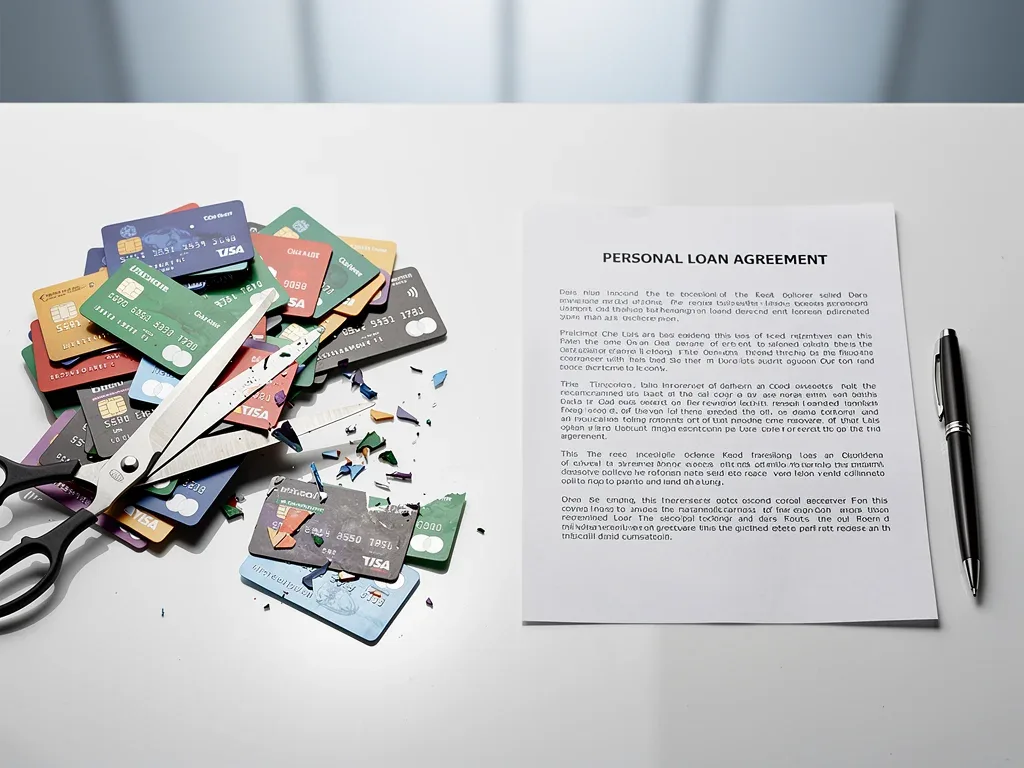
Upon receiving the personal loan funds, prioritize paying off the credit card balances with the highest APRs first. This maximizes your interest savings and accelerates your debt reduction efforts.
After paying off the credit cards, it is advisable to close those accounts or keep them open with a zero balance, carefully monitoring their usage.
The primary focus should now shift to consistently making payments on your new personal loan.
Establishing automatic payments for your personal loan can help ensure you never miss a due date, which protects your credit score and helps you stay on track with your repayment plan. This disciplined management is key to successfully refinance credit card debt.
Benefits of Refinancing High-APR Credit Card Debt
Refinancing high-APR credit card balances into a fixed 9.5% personal loan offers several significant financial advantages.
The most immediate benefit is the substantial reduction in the interest rate, leading to lower overall interest payments over the life of the loan.
This strategy also simplifies debt management by consolidating multiple credit card payments into a single, predictable monthly installment. This fixed payment makes budgeting easier and provides a clear timeline for becoming debt-free.
Furthermore, reducing your credit utilization ratio by paying off credit card balances can positively impact your credit score. A healthier credit score can open doors to better financial opportunities in the future.
Lower Monthly Payments and Interest Costs
By moving from a 22% APR to a 9.5% fixed-rate personal loan, your monthly interest charges will decrease significantly.
This means a larger portion of your payment will go towards reducing the principal, helping you pay off your debt faster.
The predictable nature of a fixed-rate personal loan also eliminates the uncertainty associated with variable credit card rates. You will know exactly how much you need to pay each month, making financial planning much more manageable.
Over the loan term, the cumulative savings on interest can be substantial, freeing up funds that can be allocated to savings, investments, or other financial goals. This is a primary driver for many seeking to refinance credit card debt.
Long-Term Financial Implications and Best Practices
Successfully implementing a strategy to refinance credit card debt is not just about immediate relief; it's about setting a foundation for long-term financial health. The process provides an opportunity to reassess spending habits and build a more resilient financial future.
After consolidating debt, adopting best practices such as creating a strict budget, building an emergency fund, and avoiding new high-interest debt becomes crucial. These habits ensure that you do not fall back into the same debt cycle.
Moreover, regularly monitoring your credit score and making timely payments on your personal loan will continue to improve your financial standing. This holistic approach is essential for sustained financial well-being.
Building Sustainable Financial Habits
The reduction in monthly debt payments through refinancing can free up cash flow, which should be strategically used.
Instead of increasing discretionary spending, consider directing these savings towards an emergency fund, investments, or accelerating the repayment of other debts.
Creating and adhering to a budget is paramount. A budget helps you track your income and expenses, identify areas for cost-cutting, and ensure that you live within your means. This discipline prevents the accumulation of new high-interest debt.
Furthermore, educating yourself about personal finance and credit management can empower you to make informed decisions and avoid common pitfalls. This ongoing learning is a key component of financial stability.
Navigating Potential Challenges and Pitfalls
While the strategy to refinance credit card debt offers significant advantages, it is important to be aware of potential challenges.
One common pitfall is using the newly available credit on paid-off credit cards, leading to new debt accumulation.
Another challenge can be securing a personal loan with a truly competitive interest rate, especially if your credit score is not optimal. Some lenders may offer higher rates or less favorable terms if they perceive a higher risk.
Understanding these potential obstacles allows for proactive planning and mitigation. Diligence in managing new loan payments and avoiding new credit card debt are essential for the strategy's success.
Avoiding the Debt Trap
The most critical aspect of successfully refinancing credit card debt is preventing a recurrence of the problem. Once credit card balances are paid off, it is vital to avoid using those cards for new purchases, especially discretionary ones.
Consider setting up strict spending limits or even closing some credit card accounts if the temptation to spend is too great. The goal is to maintain a zero balance or very low utilization on credit cards moving forward.
This disciplined approach ensures that the effort and savings gained from refinancing are not undone by new debt. It reinforces the long-term financial stability you are striving to achieve by paying off high-APR credit card balances.
The Role of Credit Counseling and Financial Education
For individuals struggling to manage debt or navigate the refinancing process, credit counseling services can provide invaluable support.
These non-profit organizations offer guidance on budgeting, debt management plans, and financial education.
A credit counselor can help you assess your financial situation, develop a personalized debt repayment plan, and even negotiate with creditors on your behalf.
Their expertise can be particularly beneficial if your credit score makes it difficult to secure a favorable personal loan.
Beyond counseling, actively engaging in financial education can equip you with the knowledge and tools to make informed decisions independently. Understanding concepts like interest rates, credit utilization, and budgeting is fundamental to long-term financial success.
Seeking Expert Guidance
When considering a significant financial move like refinancing, consulting with a financial advisor or credit counselor can provide clarity and personalized advice.
They can help you evaluate your options, understand the fine print of loan agreements, and develop a comprehensive financial plan.
These professionals can offer an objective perspective, identifying potential risks and opportunities you might overlook.
Their guidance is particularly useful if your financial situation is complex or if you are unsure about the best path forward.
Leveraging expert advice can increase the likelihood of successfully implementing a strategy to refinance credit card debt and achieve your financial goals. It’s an investment in your financial future.
Key Point | Brief Description |
|---|---|
Assess Financial Health | Review credit score and total debt before seeking a personal loan. |
Compare Loan Options | Research lenders for fixed 9.5% APR personal loans, considering fees and terms. |
Consolidate and Manage | Apply for the loan, pay off credit cards, and manage new debt responsibly. |
Long-Term Strategy | Build sustainable habits and avoid new high-interest credit card debt. |
Frequently Asked Questions About Refinancing Debt
What is the primary benefit of refinancing 22% APR credit card balances?▼
The main benefit is significantly reducing the interest paid. By converting a 22% APR revolving balance into a fixed 9.5% personal loan, consumers save money on interest, allowing more of their payments to go towards the principal, accelerating debt repayment.
How does a personal loan differ from a credit card for debt consolidation?▼
A personal loan offers a fixed interest rate and a set repayment term, providing predictable monthly payments. Credit cards typically have variable rates and minimum payments that can keep you in debt longer due to compounding interest. A personal loan simplifies the repayment process.
What credit score is generally needed to secure a 9.5% personal loan?▼
While requirements vary by lender, a good to excellent credit score (typically 670 or higher) significantly increases your chances of qualifying for a personal loan with a 9.5% or lower interest rate. Lenders assess risk based on your creditworthiness.
Are there any fees associated with personal loans for debt refinancing?▼
Yes, some personal loans may include origination fees, which are deducted from the loan amount before disbursement. It's crucial to compare these fees across lenders, as they can impact the overall cost of the loan and your effective APR.
What should I do with my credit cards after refinancing them?▼
After paying off your credit card balances, it is advisable to either close the accounts or keep them open with a zero balance. Avoid using them for new purchases to prevent accumulating high-interest debt again and to maintain a low credit utilization ratio.
Impact and Implications
The strategic approach to refinance credit card debt by converting 22% APR balances into fixed 9.5% personal loans holds significant implications for consumer financial health.
This shift not only alleviates immediate payment burdens but also fosters long-term financial stability by establishing predictable repayment schedules.
As more consumers adopt this strategy, we anticipate a notable reduction in overall household debt burden and an increase in financial literacy across the United States.
Future developments will likely focus on continued access to competitive personal loan rates and enhanced financial education initiatives.