Environmental Regulations Review: 5 Policy Shifts Since 2025
Advertisements

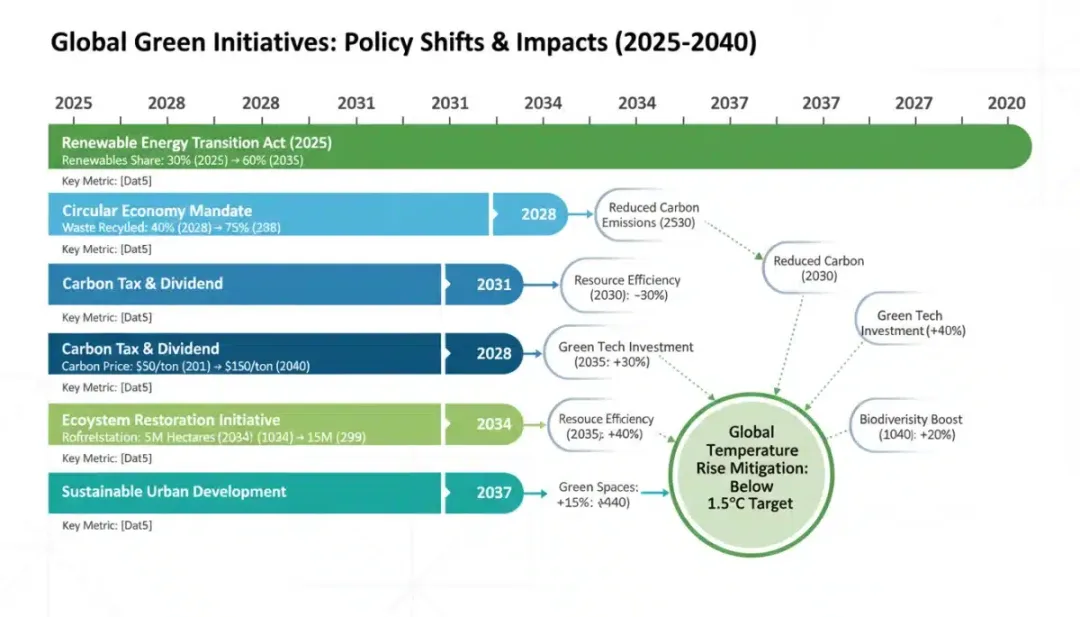
This national review offers a factual, data-driven comparison of five major Environmental Policy Shifts initiated since 2025 across the United States.
Driven by evolving climate science, these regulatory updates represent a systemic overhaul of the nation’s environmental protection framework.
This report analyzes the core tenets, initial implementation challenges, and long-term economic and ecological impacts of these changes, equipping stakeholders to navigate the new regulatory landscape effectively.
The Carbon Emissions Reduction Act (CERA) of 2026: A Landmark Shift
The Carbon Emissions Reduction Act (CERA), enacted in 2026, marked a significant departure from previous approaches to climate change mitigation.
This legislation introduced a comprehensive cap-and-trade system targeting major industrial emitters, alongside ambitious renewable energy mandates for utility providers.
Its primary goal is to achieve a 30% reduction in national carbon emissions by 2035, building on earlier voluntary initiatives with legally binding targets.
CERA represents one of the most impactful Environmental Policy Shifts 2025, directly influencing energy production and industrial practices.
Initial reports from the Environmental Protection Agency (EPA) indicate that CERA has spurred substantial investment in green technologies and energy efficiency.
However, some heavy industries have voiced concerns regarding compliance costs and potential competitive disadvantages in the short term.
Mandates and Market Mechanisms
CERA’s cap-and-trade component establishes a declining cap on total emissions, with allowances distributed among regulated entities.
Companies can buy or sell these allowances, creating a market-based incentive for emissions reduction, as reported by the Department of Energy.
The act also includes provisions for carbon capture and storage technologies, offering tax credits and grants for their development and deployment.
This dual approach aims to accelerate decarbonization across multiple sectors, aligning with the broader goals of the Environmental Policy Shifts 2025 framework.
- Emissions Cap: A declining national limit on carbon dioxide emissions.
- Allowance Trading: A market mechanism for buying and selling carbon allowances.
- Renewable Energy Targets: Mandates for utilities to increase their renewable energy portfolio.
- Technology Incentives: Financial support for carbon capture and other green technologies.
The effectiveness of CERA hinges on robust enforcement and the stability of the carbon market. Early data suggests a positive trend in emissions reduction, though economic volatility could pose challenges to sustained progress.
The Water Quality Modernization Act (WQMA) of 2027: Protecting Aquatic Ecosystems
The Water Quality Modernization Act (WQMA) of 2027 represents a critical enhancement to the nation’s efforts in safeguarding water resources.
This policy focuses on updating antiquated wastewater treatment standards and addressing emerging contaminants, such as microplastics and per- and polyfluoroalkyl substances (PFAS).
WQMA sets more stringent discharge limits for industrial and municipal facilities, requiring advanced filtration technologies.
These measures are pivotal in the array of Environmental Policy Shifts 2025, aiming for cleaner rivers, lakes, and coastal waters across the United States.
According to the National Oceanic and Atmospheric Administration (NOAA), the act also expands funding for watershed restoration projects and provides grants for communities to upgrade their water infrastructure.
This holistic approach seeks to improve both ecological health and human access to safe drinking water.
Enhanced Monitoring and Enforcement
A key aspect of WQMA is its emphasis on real-time water quality monitoring, utilizing satellite technology and advanced sensor networks.
This allows for quicker detection of pollution incidents and more efficient enforcement actions by state environmental agencies, as noted by the EPA.
The act also introduces higher penalties for non-compliance, providing a stronger deterrent against illegal dumping and industrial pollution.
These stricter regulations are a direct outcome of the broader Environmental Policy Shifts 2025, reflecting a commitment to measurable environmental improvements.
- Stricter Discharge Limits: New standards for industrial and municipal wastewater.
- Emerging Contaminant Focus: Specific regulations for microplastics and PFAS.
- Infrastructure Funding: Grants for water treatment upgrades and watershed restoration.
- Real-time Monitoring: Advanced systems for continuous water quality assessment.
While the initial costs for upgrading infrastructure are substantial, the long-term benefits in public health and ecosystem services are expected to outweigh these investments.
The WQMA is poised to significantly impact the nation’s water quality over the next decade.
The Biodiversity Preservation Initiative (BPI) of 2028: Safeguarding Natural Heritage
The Biodiversity Preservation Initiative (BPI), enacted in 2028, addresses the accelerating loss of species and habitats across the country.
This policy introduces expanded protections for endangered species, establishes new national wildlife corridors, and allocates substantial funding for habitat restoration projects.
BPI represents a direct response to scientific consensus on biodiversity decline, incorporating strategies for land acquisition and collaborative management with private landowners.
It is a vital component of the Environmental Policy Shifts 2025, prioritizing ecological resilience and conservation.
The Department of the Interior reports that the initiative has already led to the creation of several new protected areas and has facilitated cross-state cooperation on conservation efforts.
This proactive stance aims to reverse decades of habitat fragmentation and species endangerment.
Ecosystem Services and Community Engagement
Beyond species protection, BPI emphasizes the value of ecosystem services, such as pollination, water purification, and climate regulation.
The policy encourages local communities to participate in conservation through grant programs and educational outreach, fostering a sense of shared responsibility.
The initiative also includes provisions for assessing the impact of infrastructure projects on biodiversity, requiring developers to implement mitigation strategies.
This holistic approach underscores the interconnectedness of ecological health and human well-being, a central theme among the Environmental Policy Shifts 2025.
- Expanded Species Protection: New listings and enhanced safeguards for threatened and endangered species.
- Wildlife Corridors: Establishment of contiguous habitats to facilitate species movement.
- Habitat Restoration: Significant investment in ecological recovery projects.
- Community Grants: Funding for local conservation and educational programs.
The success of BPI relies on sustained funding and broad public support. Early indications suggest a growing awareness of biodiversity issues, which could bolster the initiative’s long-term effectiveness in the United States.
The Sustainable Agriculture and Land Use Act (SALUA) of 2029: Greening the Farm Belt
The Sustainable Agriculture and Land Use Act (SALUA) of 2029 marks a pivotal moment for the agricultural sector, promoting practices that reduce environmental footprint while enhancing food security.
This policy incentivizes farmers to adopt sustainable methods, including reduced pesticide use, improved soil health, and water conservation techniques.
SALUA offers financial assistance and technical support for transitioning to organic farming and agroforestry systems.
This is a crucial element among the Environmental Policy Shifts 2025, aiming to transform agricultural landscapes into more resilient and environmentally friendly operations.
According to the U.S. Department of Agriculture (USDA), the act also includes provisions for protecting prime agricultural land from urban sprawl and supports research into climate-resilient crops.
These measures are designed to ensure long-term sustainability for both farmers and the environment.
Incentives and Best Practices
Farmers who enroll in SALUA programs can receive subsidies for implementing practices such as cover cropping, no-till farming, and precision irrigation.
These incentives are designed to make sustainable agriculture economically viable for a wider range of producers, as highlighted by state agricultural extension offices.
The act also funds educational programs and demonstration farms to disseminate best practices and foster innovation within the agricultural community.
This focus on knowledge transfer is vital for the successful implementation of the Environmental Policy Shifts 2025 in a sector traditionally resistant to rapid change.
- Soil Health Incentives: Subsidies for practices that improve soil structure and fertility.
- Water Conservation: Support for efficient irrigation and water management systems.
- Pesticide Reduction: Programs promoting integrated pest management and organic alternatives.
- Land Preservation: Measures to protect agricultural land from non-farm development.
While initial adoption rates vary by region, the long-term benefits of SALUA in terms of reduced pollution, enhanced biodiversity, and increased farm resilience are expected to be substantial.
The act represents a significant investment in the future of American agriculture.
The Waste Management and Circular Economy Act (WMCEA) of 2030: Towards Zero Waste
The Waste Management and Circular Economy Act (WMCEA) of 2030 represents a bold step toward a more sustainable consumption and production model.
This policy shifts the focus from waste disposal to waste prevention, reuse, and recycling, aiming to establish a functional circular economy across the nation.
WMCEA introduces extended producer responsibility (EPR) schemes for various product categories, holding manufacturers accountable for the entire lifecycle of their goods.
This is a transformative element within the broader Environmental Policy Shifts 2025, challenging traditional linear economic models.
The EPA reports that the act provides grants for developing innovative recycling technologies and supports the creation of regional circular economy hubs.
These hubs will facilitate the collection, processing, and redistribution of materials, reducing reliance on virgin resources.
Product Design and Consumer Responsibility
A core tenet of WMCEA is the promotion of sustainable product design, encouraging manufacturers to create durable, repairable, and recyclable goods.
The policy also includes public awareness campaigns to educate consumers on their role in reducing waste and participating in circular systems.
The act sets ambitious targets for landfill diversion and mandates the phasing out of certain single-use plastics, reflecting a strong commitment to environmental protection.
These comprehensive measures are integral to the Environmental Policy Shifts 2025, impacting both businesses and individual consumers.
- Extended Producer Responsibility: Manufacturers held accountable for product lifecycle.
- Waste Prevention Targets: Ambitious goals for reducing overall waste generation.
- Recycling Innovation: Funding for advanced recycling technologies and infrastructure.
- Single-Use Plastic Reduction: Phased elimination of specific non-recyclable plastics.
The implementation of WMCEA requires significant behavioral changes from both industry and the public. However, the potential for reduced environmental impact and the creation of new green jobs makes it a critical policy for the nation’s sustainable future.
Comparing the Cumulative Impact of These Policy Shifts
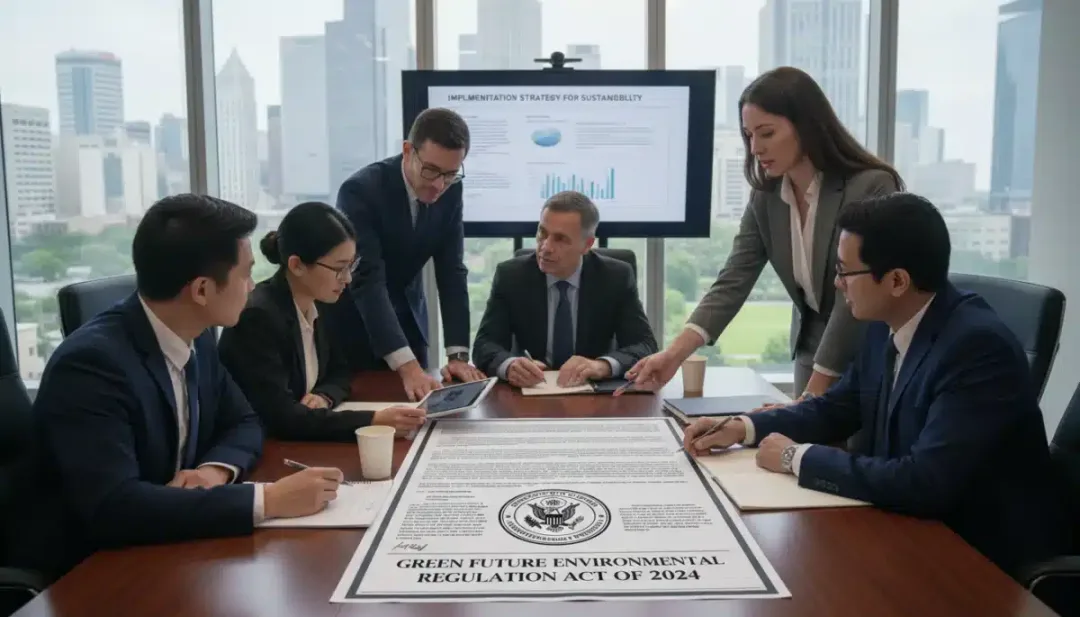
The cumulative impact of the Environmental Policy Shifts 2025 is projected to be transformative, creating a more cohesive and robust environmental governance framework.
Individually, each policy targets a specific domain, but together, they form an interconnected strategy for sustainability.
CERA addresses climate change, WQMA focuses on water quality, BPI protects biodiversity, SALUA greens agriculture, and WMCEA drives circularity.
This integrated approach aims to tackle complex environmental challenges from multiple angles. The synergy between these acts is a key aspect of their long-term effectiveness.
Early assessments indicate that while each policy has its unique implementation challenges, there is a growing recognition of their complementary nature.
The success of one policy often reinforces the objectives of another, creating a ripple effect of positive environmental outcomes across the United States.
Interdependencies and Synergies
For example, the carbon reductions achieved by CERA can indirectly benefit water quality by reducing atmospheric deposition of pollutants, aligning with WQMA goals.
Similarly, SALUA’s promotion of healthy soils can enhance biodiversity, supporting the objectives of BPI.
The move towards a circular economy under WMCEA also reduces the demand for virgin resources, lessening the environmental impact of extraction and processing, which in turn supports broader conservation efforts.
These interdependencies highlight the strategic design behind the Environmental Policy Shifts 2025.
- Climate-Water Nexus: CERA’s emissions reductions benefiting water quality.
- Agriculture-Biodiversity Link: SALUA’s sustainable practices supporting BPI’s goals.
- Circular Economy Benefits: WMCEA reducing resource demand, aiding overall conservation.
- Holistic Governance: Policies working in concert for comprehensive environmental protection.
While the full extent of these synergies will only become apparent over time, the initial framework suggests a well-considered strategy for addressing the nation’s most pressing environmental concerns.
Continuous monitoring and adaptive management will be critical for maximizing their collective benefits.
| Policy Focus | Primary Impact Area |
|---|---|
| CERA (2026) | Carbon emissions reduction, renewable energy integration |
| WQMA (2027) | Water quality, emerging contaminant control, infrastructure |
| BPI (2028) | Biodiversity protection, habitat restoration, wildlife corridors |
| SALUA (2029) | Sustainable agriculture, soil health, land use preservation |
| WMCEA (2030) | Waste reduction, circular economy, extended producer responsibility |
Frequently Asked Questions About New Environmental Policies
What are the main goals of the Environmental Policy Shifts 2025?▼The primary goals include drastic carbon emissions reduction, enhanced water quality, robust biodiversity protection, promotion of sustainable agricultural practices, and fostering a circular economy by minimizing waste. These shifts aim for comprehensive environmental sustainability.
How do these policies impact industries in the United States?▼Industries face new compliance requirements, such as carbon caps, stricter discharge limits, and extended producer responsibility. While presenting challenges, these policies also drive innovation in green technologies and create new market opportunities for sustainable solutions.
Are there financial incentives for complying with these new regulations?▼Yes, several policies offer financial incentives, including tax credits for carbon capture, grants for water infrastructure upgrades, subsidies for sustainable agriculture, and funding for recycling innovation. These aim to ease the transition and encourage adoption of environmentally friendly practices.
What role do state and local governments play in these shifts?▼State and local governments are crucial for implementation and enforcement, often translating federal mandates into local regulations. They also manage grant programs, conduct monitoring, and engage with communities to ensure effective policy integration and public participation.
What are the long-term environmental benefits expected from these policies?▼Long-term benefits include a significant reduction in greenhouse gas emissions, cleaner water bodies, healthier ecosystems with increased biodiversity, more resilient agricultural systems, and substantial waste reduction. These contribute to a more sustainable and healthier future.
Perspectives: The Path Forward for Environmental Governance
The ongoing National Review of Environmental Regulations: Comparing the Impact of 5 Recent Policy Shifts Since 2025 (COMPARISON/ANALYSIS) underscores a pivotal moment in American environmental governance.
These comprehensive policy shifts are not merely legislative updates but represent a foundational restructuring of how the nation approaches its ecological responsibilities.
The success of these initiatives will hinge on continued political commitment, technological innovation, and broad public engagement.
Looking ahead, the focus will shift from initial implementation to long-term efficacy and adaptive management. Monitoring the interconnected impacts of these policies and making necessary adjustments will be crucial.
Navigating this complex regulatory environment requires a clear framework; understanding the foundational guidelines of the National Environmental Policy Act review process remains essential for federal agencies and stakeholders to ensure compliance amid these rapid updates.
The interplay between CERA, WQMA, BPI, SALUA, and WMCEA will define the environmental health of the United States for decades to come, setting a precedent for future policy development.
Stakeholders should remain vigilant, tracking official reports, scientific assessments, and economic indicators to fully grasp the evolving landscape shaped by these significant Environmental Policy Shifts 2025.
This sustained attention will help ensure that the intended benefits are realized and that any unforeseen challenges are addressed proactively, fostering a more sustainable future.